


2026 Chevy Traverse vs 2026 Ford Explorer: A Side-by-Side Look
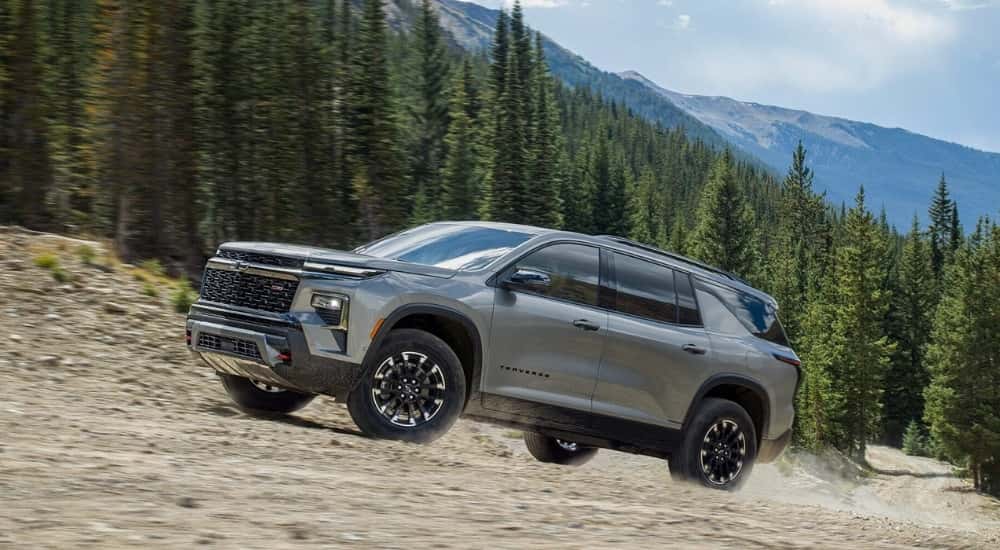
If you are currently looking for a Chevy Traverse for sale, our inventory provides a strong starting point. The Traverse continues to appeal to drivers who value versatility, refinement, and family-friendly space.
It may be time to consider an SUV that can confidently support daily errands, family travel, and long road trips with equal ease. Before making a final purchasing decision, it is important to evaluate how different SUV models compare in key areas to help choose a vehicle that not only meets your immediate needs but also provides long-term value and reliability.
The 2026 Chevy Traverse and the 2026 Ford Explorer are both strong contenders in the three-row SUV segment, but meaningful differences set them apart. That said, one SUV delivers more advanced features and better overall value. Let’s take a closer look to determine which SUV rises above the rest.
Power That Leads the Pack
Power sets the tone before you hit the road. The 2026 Traverse arrives with a turbocharged 2.5-liter engine that pumps out up to 328 hp and 326 lb-ft of torque. These figures contribute to a strong and confident driving experience. Paired with an eight-speed automatic transmission, it delivers smooth, confident acceleration whether you are passing an eighteen-wheeler or handling quick maneuvers in urban traffic. These specs indicate a performance-oriented setup—making it clear that the Traverse is built for serious driving.
While the Explorer comes with a standard 2.3-liter EcoBoost turbo I-4 producing up to 300 hp and 310 lb-ft of torque—enough for everyday driving—it doesn’t quite match the Traverse’s standard performance. When compared side by side, the Traverse clearly offers more power and capability, making it the standout choice for drivers who want a confident, capable SUV.
Ford does offer a twin-turbo 3.0-liter V6 producing approximately 400 hp and 415 lb-ft of torque; however, achieving this requires selecting higher trims and a significantly higher investment. In this comparison, power is more than a specification—it is a statement, and the Traverse clearly establishes an advantage right from the start.
Seating and Cargo Built for Real Life
Space can make or break an SUV long before horsepower becomes a factor. The Traverse shows up ready for real-life demands, offering seating for up to seven passengers standard and up to eight with available configurations.
This flexibility helps ensure the third row remains practical and comfortable for regular use. Carpools, unexpected tag-along friends, and relatives who arrive without notice can be accommodated smoothly rather than disrupting your plans.
The Explorer, by comparison, offers standard seating for six on most trims, leaving the Traverse ahead with its more versatile standard capacity across the lineup.
Cargo Volume
When it comes to cargo, the Traverse stands out, offering best-in-class space and versatility. With up to 98 cu.ft. of maximum cargo volume, it stands at the top of its class—a capacity that supports a wide variety of large cargo, providing ample space for every need. Whether it is camping gear, sports equipment, furniture, or an unexpected flea-market find, the Traverse has room for it all.
The Explorer follows up short with only 85.8 cu.ft., and the difference becomes painfully clear when you’re loading larger or bulkier items. Even when fully seated, the Traverse maintains a generous cargo capacity, crucial for real-world demands that still exceeds the Explorer’s capability.
A Digital Experience Ahead of the Competition
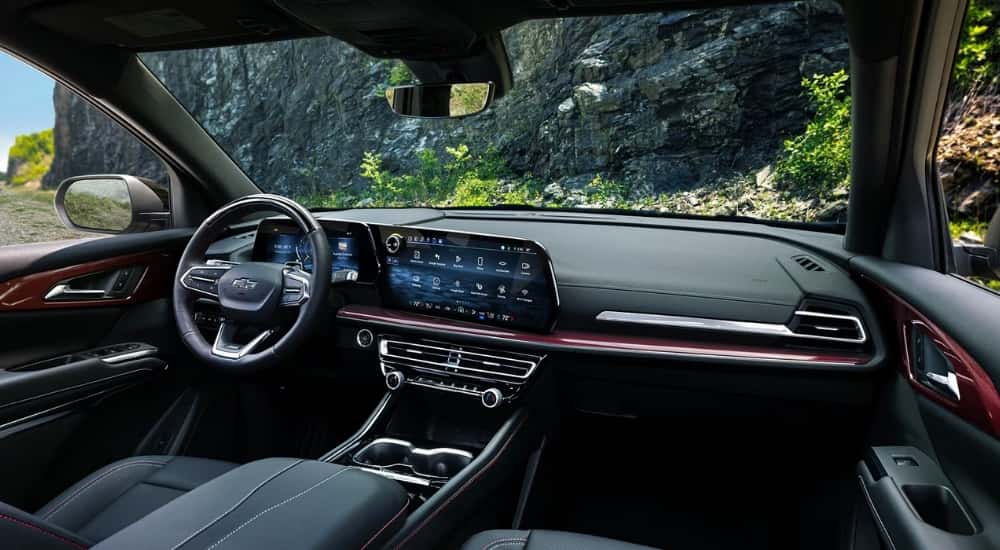
Upon entering the Traverse, the focus naturally falls on the technology rather than the upholstery or detailing. Dominating the interior is a 17.7-inch diagonal touchscreen, placing Chevrolet at the forefront of infotainment and making many competitors’ systems feel comparatively outdated. At the same time, the Explorer falls short once again with only a 13.2-inch infotainment screen.
Navigation, Google built-in, apps, climate control, playlists, and communication—all of it lives here, and it responds to taps and swipes like it already predicted your next move. The system is designed so you do not scroll endlessly; instead, information appears where you need it, arranged in a simple, straightforward way to navigate.
Behind the wheel, the Traverse comes equipped standard with an available 11-inch driver information display, whereas the Explorer offers this feature only as an additional option. Key data such as speed, navigation directions, vehicle safety alerts, and drive settings are displayed clearly, helping drivers stay informed without losing focus. Combined with features like available wireless Apple CarPlay and Android Auto, passengers and drivers alike stay synced, connected, and cable-free.
Hands-Free Driving
Next is a feature that immediately captures attention: Super Cruise. This hands-free driving system is available on compatible roads across the United States and Canada. With over 585,000 miles of hands-free driving, the system can manage steering, braking, and acceleration.
It even handles lane changes, giving a sense of effortless control while staying completely within traffic rules. The Explorer offers driver-assist features, including Ford’s BlueCruise hands-free system on compatible roads, along with displays—but even with these, it doesn’t deliver the same standout moments or intuitive experience that redefine expectations the way the Traverse’s Super Cruise does.
Towing That Works for You
Towing capability matters more than most realize. Even if you believe you will “never tow anything,” life often presents situations you cannot refuse—a couch that needs moving, a dirt bike that needs transporting, or a few heavy items that require extra support.
The 2026 Chevy Traverse comes prepared for those moments, offering up to 5,000 lbs of towing capability when properly equipped. That means you can handle small boats, weekend trailers, pop-up campers, or enough lumber for home projects—all without breaking a sweat.
The Explorer, depending on configuration, can also tow up to 5,000 lbs, but here is the important detail to consider: capability depends heavily on trim and engine selections. It sometimes requires stepping up to pricier configurations just to join the same conversation.
The Traverse offers towing capability without requiring complex option selections to determine its suitability. Towing is treated as an integral, readily available feature—a practical tool at your disposal—rather than a privilege reserved for those who invest in higher trims or additional packages.
Traverse vs. Explorer: The Clear Advantage
In a head-to-head matchup, the Traverse demonstrates advantages in several key areas where it actually matters.
Its standard powertrain already feels like an upgrade before you add a single option, giving drivers strength without needing to climb a trim ladder first. The interior accommodates real-world living with generous seating and flexible space, ready for passengers and surprises alike.
Cargo volume is generous enough to support a wide range of needs, while the towing capability steps in as dependable muscle for weekend projects or vacation plans without making it feel like you must earn the right to use it. Technology only widens that gap. Efficiency wraps the package by offering numbers drivers can predict, rely on, and budget around.
While the Ford Explorer offers respectable performance and a familiar suite of features, it consistently trails the Traverse in key areas that matter most to real-world drivers. From its smaller standard seating and reduced cargo space to less advanced technology and a less intuitive towing setup, the Explorer struggles to match the versatility, capability, and forward-looking design of the 2026 Chevy Traverse.
Ultimately, the Traverse stands out not for a single standout feature, but for delivering excellence across every category that matters.
The Clear Choice: Traverse Delivers Where It Counts
By this point, the contrast is obvious. The Traverse meets the demands of real-world family life with thoughtful design and functionality, while the Explorer feels less deliberate in its approach.
So where does that leave you? If you feel the quiet instinct to take a closer look, it is worth following. With the 2026 Chevy Traverse, there’s no need to prove itself; its performance and practicality speak for themselves.
The Explorer has had its opportunity and performed respectably. Yet, when the doors close and the engine roars to life, only one of these vehicles feels truly modern, capable, and prepared for any challenge. The 2026 Chevy Traverse excels in this regard—not by asking if you deserve more, but by delivering it effortlessly.
0 comment(s) so far on 2026 Chevy Traverse vs 2026 Ford Explorer: A Side-by-Side Look